
Turtle Explosion
Leave them alone

Opinions expressed within the content are solely the author’s and do not reflect the opinions and beliefs of any listed websites, their affiliates, any entity—physical or otherwise—anything, anyone, or any other form of matter that isn’t completely and uniquely me.
10 May 2026
In 2012, I spent a few months volunteering at the Amazoonico Wildlife Rescue and Rehabilitation centre in Ecuador. From ocelots, to monkeys, to wild pigs, and snakes - we collected the forgotten and damaged of the human-wildlife interface.
Some of the animals were spoils of the illegal wildlife trade, others refugees after parents had been murdered for stealing food from farms, or killing dogs - trying to get a meal. Many of their habitats were getting decimated - and they were thrown into centres like ours for being a nuisance. Some snakes had their skins sloughing off them - poisoned from being draped like scarves over necks of tourists, doused in sunscreen, perfume, and mosquito repellent.
We had babies of all species, too young to care for themselves, and now too dependent on a human surrogate to ever be released into the wild. We had monkeys, taken in as pets when small and thrown out when they became too big or wild to handle. Others had been experimented on in laboratories - now too feral and angry to even be social with others like them.
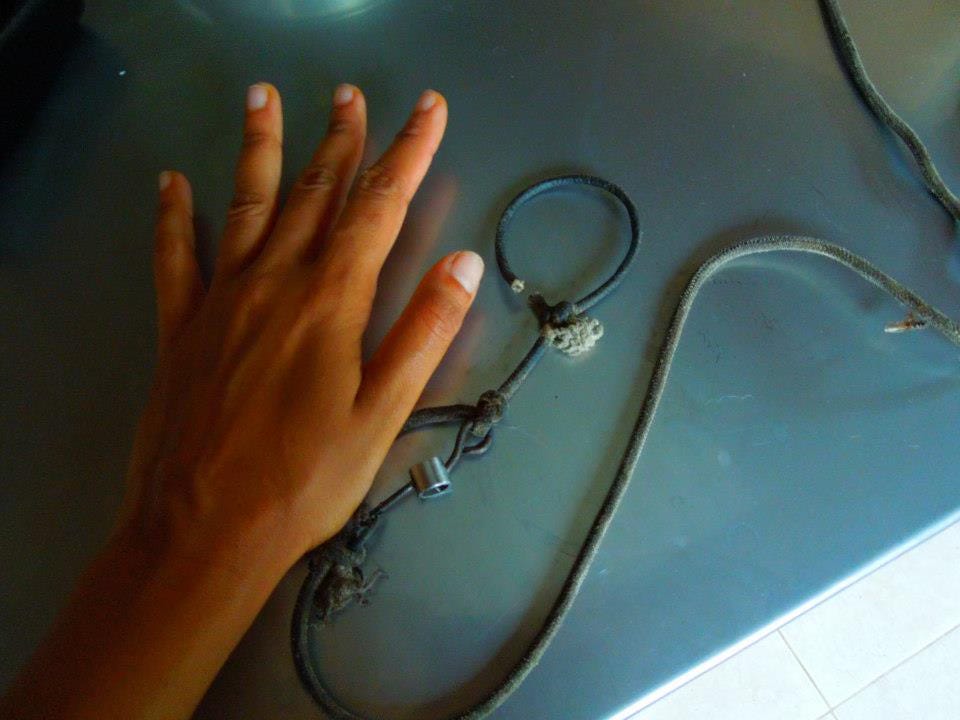
Cord removed from the waist of a capuchin monkey that had started to cut into his flesh.
That’s where my mind wandered off to - the jungles of the Ecuadorian Amazon jungle, when a man holding a baby monkey with a cord tied around its waist walked up and down Unawatuna beach in front of a restaurant I was sitting at in Sri Lanka.
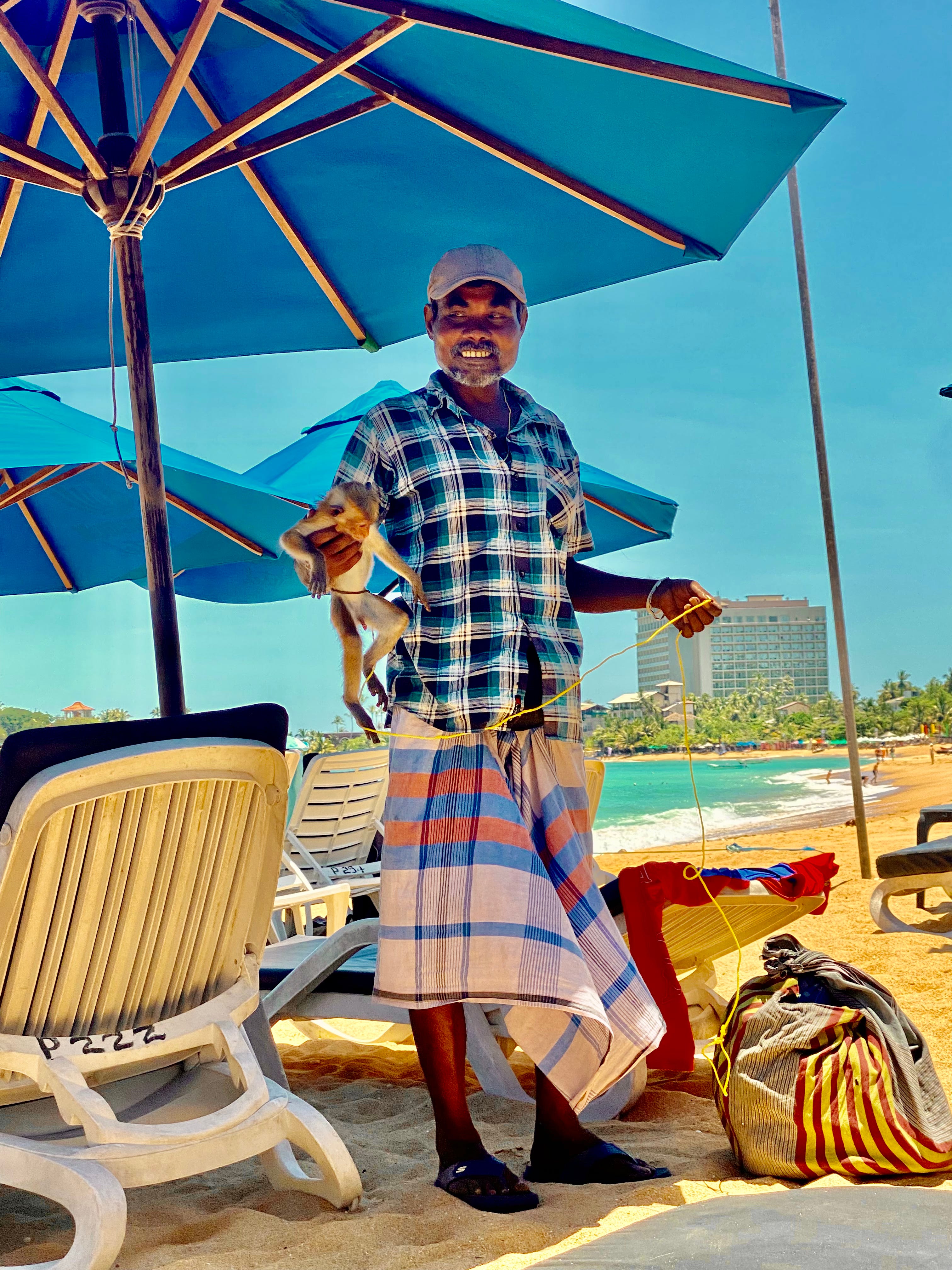
I was glad that my brown skin seemed to be a deterrent, for he didn’t bother coming and sticking the monkey in my face, asking if I wanted a photo, or to carry the baby for 5000 LKR.
The average Sri Lankan wage is 55,000 LKR per month, so could you blame him?
This happens all over the world - because tourists allow it.
They’re in a new country, they’re happy to do things they wouldn’t normally do at home - including pay money to touch a baby monkey with a cord tied around its waist.
The fault is not on a local guy capitalising on a business venture. It’s with us, who turn a blind eye to the suffering of the animals we use for our entertainment. To the system that we allow to continue. To these unsustainable businesses that boom because we are entitled tourists that leave our morals, ethics, and values at home.
This baby monkey will not be a baby forever.
And then what happens to him?
And what happens when the next baby is ripped away from the safety of its mother to find himself on the end of a cord?
And to the one after that?
Because it’s not going to stop.
There are approximately 18 sea turtle hatcheries located along the southern coast of Sri Lanka.
While many hatcheries have the turtles’ safety and well-being in mind, some of these hatcheries are illegal, and run under the pretence of helping turtle conservation. Many of them work by digging up nests along beaches after mama turtles come up to lay their eggs. They charge tourists to come in and watch these babies squirm around in their unnatural hostels, also to carry them into the ocean.
Tourists can then buy the juveniles to be released into the ocean, even though this is against the law and harmful to the baby turtles.
Coming into contact with humans can transfer germs to the turtles, and being released into the ocean in small numbers, during daylight, reduces the juveniles’ chances of survival.
These baby turtles find their way into the ocean using the light of the moon, usually emerging at night. Now however, with light pollution becoming more and more pervasive, the babies are getting confused - running into the streets.
Only 1 in 1000 turtles survive into adulthood, and 6 of the 7 sea turtle species are endangered.
Now with climate change, habitat loss, and pollution - life is already getting a lot more difficult for turtles without us messing up their first journeys to the sea.
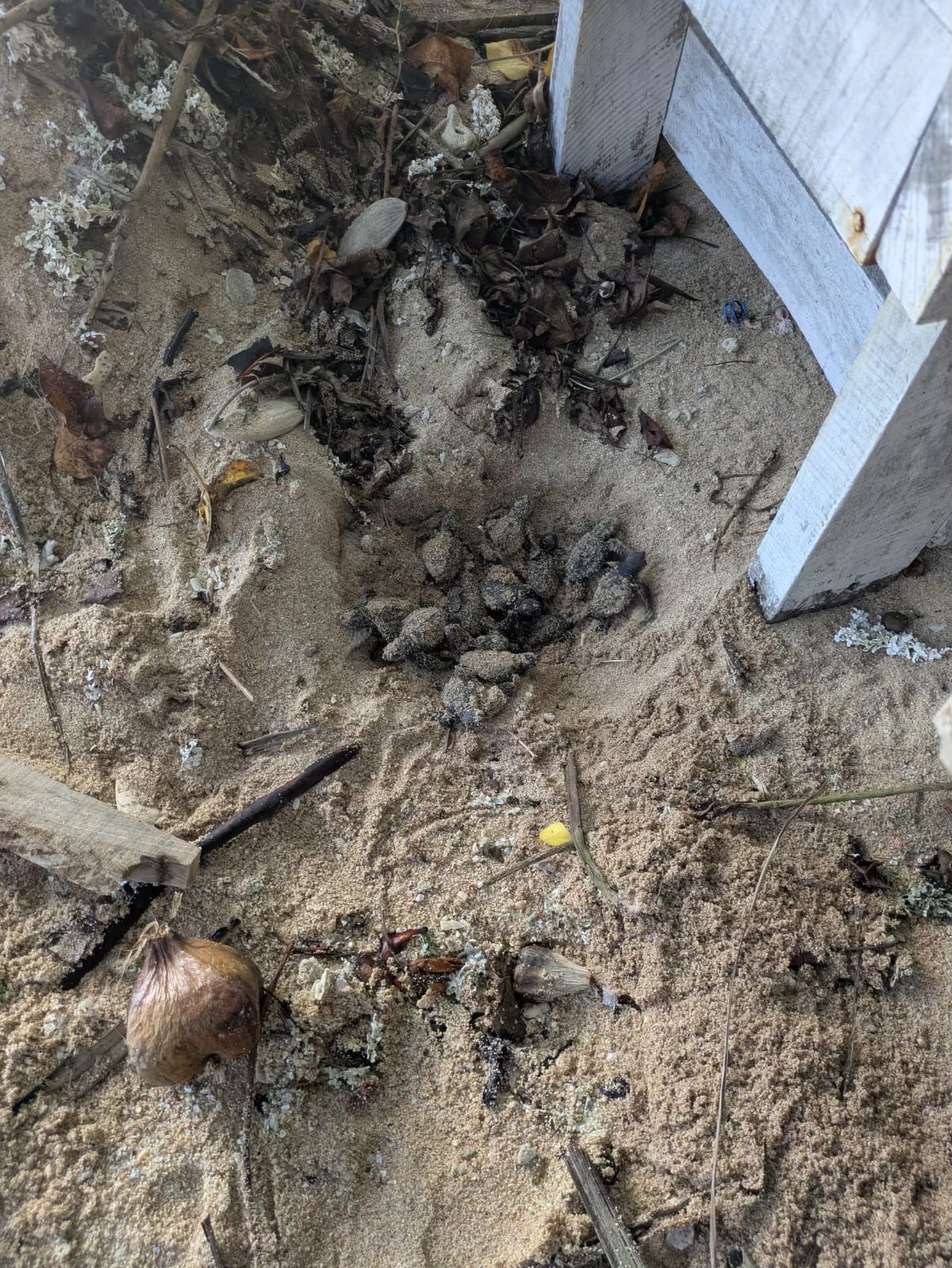
An explosion of baby turtles I got to witness randomly on a beach.
When will we learn that animals don’t exist for our entertainment?
When will we allow a relationship of co-existence, where both human and other-than-human worlds are allowed to thrive, as they are, where they are?
When will we step off the pedestals we’ve erected for our species, believing that we are allowed to dominate over all else, and have been given the right to exploit?
What I can offer: HERE
💌 Let’s talk: change@theecochapter.com
In service of our planet,
💚 Marla Lise, Earthling at The Eco Chapter
The turtles are lucky to have you there.